
Na Ye 娜夜
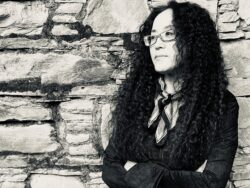 Na Ye graduated from Nanjing University’s Department of Chinese and worked for many years in news media. She is a member of the Poetry Committee of the China Writers Association and was chosen as a ‘Cultural Luminary’ in the national ‘Four Batches’ Talent Program. Her poetry collections include Windy, Resume, Flames and Wrinkles, and The Words I Choose. She was the winner of the 3rd Lu Xun Prize for Literature.
On her practice of writing poetry, Na Ye writes:
Every poem is a mute child searching for their voice. Every poet is, too.
In the past forty years of writing, I take comfort in the fact that in an age when anything can be written, I’ve written what I wanted to write, what I should write, what I had to; I’ve been a witness and a participant.
The date of composition at the bottom of a poem will become more and more important to you.
If every poem is a dot, and you connect the dots, you end up with a poet’s life.
Every poet has their own limitations and problems to solve. I’ve never been confident in my own writing.
Some poems are always stuck in the ‘run-up’. They never take the final leap.
Sometimes poems are like foliage. If we can’t bear to prune them back, the plant will never reach its full height.
Sometimes you want to take a poem down the wrong path, but it leads you back up onto the avenue.
Sometimes you’re surprised by divine intervention. Then you know the poem has surpassed you.
I find it very satisfying to write poems about love, and about temples. Why?
If you approach writing thinking you’re a master, or are driven by your conscience, virtue, justice, or even truth – that’s dangerous, of course.
Getting an award is just a reminder to the winner: from now on, your work will be held to a higher standard.
Poetry deals with politics as naturally as it does with plants.
Time passes. Some words have already disappeared from my life. Some are still waiting for me to experience them.