
Bai Hua 柏桦 on Modern Chinese Poetry
- Date
- Wednesday 18 June 2025, 2-3pm
- Location
- B.08 Parkinson Building
- Category
- Talk
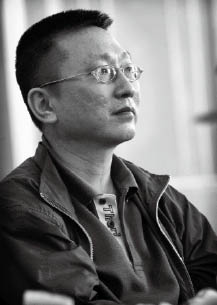 We are delighted to be hosting the renowned poet Bai Hua this year, on a Cheney Fellowship. Come to hear about how Chinese poetry has developed over the last century. After the talk there will be opportunities for further informal conversations with Bai Hua in the same venue.
About the speaker
Considered the central literary figure of the post-“Misty” poetry movement of the 1980s, Bai Hua was born in Chongqing in 1956. After graduating from the Guangzhou Foreign Languages Institute, he taught at various universities before starting work as an independent writer. His first book, Expression (1988), received immediate critical acclaim. A highly demanding writer, Bai Hua has composed only about ninety poems over the past thirty years, and from the late 1990s until 2007, he wrote no poetry at all. However, during this more than a decade of silence, he remained a prolific writer of prose and hybrid texts. Bai Hua has received the Rougang Poetry Award and the Anne Kao Poetry Prize.
Lecture in Chinese, with English interpretation. Chaired by Austin Woerner:-
"The West Comes East: Three Modern Poetries Across Three Eras of Modern China"
In this talk, acclaimed contemporary poet Bai Hua will discuss the evolution of modern Chinese poetry over the course of the twentieth century, exploring how what it means for poetry to be "modern" has changed across three distinct eras. From the scientific awareness of the poetry of the May Fourth Movement, to the heroic utopianism of the Mao era, to the repudiation of heroism and return to the everyday in the poetry of the Deng Xiaoping era, each generation of Chinese poets have pursued a different ideal of modernity under the influence of the West.
西风东渐之三个时代三种现代性的诗歌写作
演讲摘要
三个时代是指:五四时代、毛泽东时代、邓小平时代。从演讲题目可知,本报告将讨论这三个时代的三种不同的诗歌写作风貌。在第一个时代,我将谈论五四诗歌的科学(知性)面向,这一点以前没人谈论过;在第二个时代,我将谈论现代诗歌的乌托邦冲动、对毛文体中的辩证句式的运用,英雄主义与斗争姿态;在第三个时代,诗歌消解了英雄,回归到平凡,同时新一代诗人继续保持对西方现代性的仰望和追求。
This is an excellent opportunity to learn about the developments in contemporary Chinese poetry from one of the most acclaimed practitioners and academics. All very welcome.