Challenging Narratives: Chinese Children’s Lit in Anglophone Contexts
We are pleased to provide a blog report on our annual symposium, written by our Centre PhD researchers, Wang Yueran and Zhang Ying
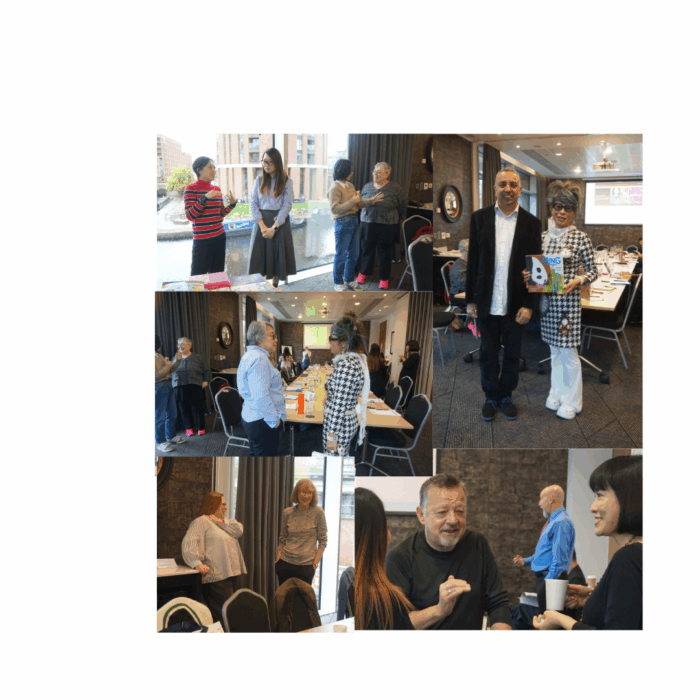
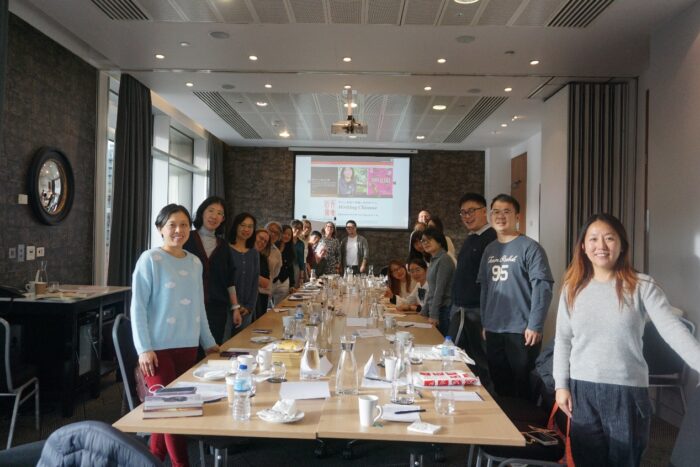 The Challenging Narratives: Chinese Children’s Literature in Anglophone Contexts Symposium has concluded recently. Organized by the centre directors, Professor Frances Weightman, Dr. Sarah Dodd, and Dr Li Xunnan, the symposium revolved around the contemporary landscapes of Chinese children’s literature and Chinese Children’s literature in Anglophone contexts. It brought together authors, translators, educators, researchers, and publishing professionals, providing an interactive platform for exchanges of ideas about the creation, translation, teaching, and publishing of Chinese Children’s Literature from various perspectives.
The symposium was launched with an inspiring keynote presentation by Professor Zhao Xia, where she illuminated the ethical concerns and the ethical intentions in contemporary Chinese Children’s literature. She criticized the insincere tendency to idealize, exaggerate or simplify children by referring to literary conventions and habits in contemporary Chinese Children’s literature. At the end of her speech she called for sincerity from authors of Children’s literature to observe, understand and show children’s complicated feelings in real life.
Following the keynote presentation, Joe Sutliff Sanders, Wang Yue (Cathy), Lu Jing, and Chen Minjie respectively gave four presentations on the first roundtable discussion - New research projects on Chinese children’s literature, chaired by Frances Weightman. The presentations illuminated critical features of Chinese Children’s literature and several classic and contemporary titles, such as didacticism in Cao Wenxuan’s Bronze and Sunflower, adaptive nostalgia in Nie Jun’s My Beijing: Fours Stories of Everyday Wonder, the shifts of gender equality in Chinese comic books of the Ballad of Mulan, and overseas dissemination of Chinese traditional culture in the video game Black Myth: Wukong.
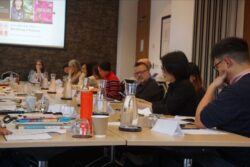
After bilingual readings of Yao Emei’s Tilted Sky, translated by Kelly Zhang, and Shen Yang’s More than One Child, translated by Nicky Harman, the second roundtable discussion, Writing for children and writing about childhood, commenced, chaired by Sarah Dodd. The panel included three authors, Yao Emei, Shen Yang, and Yan Ge, who touched on the motivations, challenges, and future expectations of children’s literature based on their own writing journeys. Their dedicated discussion echoes the idea of “sincerity” in the keynote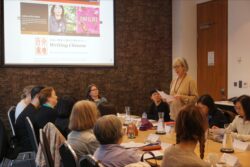 presentation, reflecting on giving visibility to different childhood lives in the real world and stimulating the readers’ resonance with the story.
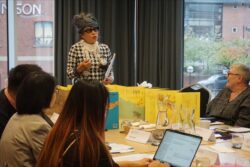 The next roundtable discussion of the first day was dedicated to the topic of Picturing children, chaired by Jake Hope. Yu Rong, Kelly Zhang, Lucia Obi, and Shen Yang offered insights into the publishers’ expectations of Chinese picture books for children in the Anglophone world and the recurring images of children from the past in Chinese children’s literature due to ideological influences. Jointly, the panel proposed that despite being set in China, Chinese stories in picture books contain universal appeal and recommended bonding between author and illustrator to facilitate a better collaboration of texts and illustrations.
The last roundtable discussion of the first day, Translating children’s books, chaired by Chen Minjie,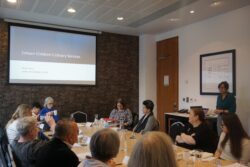 was joined by three translators, Helen Wang, Kelly Zhang, and Nicky Harman. The translators shed light on choices of words, pitching translations to publishers, and tackling narrative challenges in the Anglophone contexts. The following discussion focused on liberating the translator from the constraints of translation theories.
On the second day, four additional roundtable discussions were held, featuring speakers from academia, educational institutions, libraries, and the publishing industry, who shared their diverse experiences engaging with Chinese children’s literature in the Anglophone world.
 Roundtable 5 focused on new research projects on Chinese children’s literature. Bai Runyuan explored how gender narratives in Chinese children’s literature from 1995 to 2022 have been shaped and reshaped by China’s One Child Policy and the evolving social expectations following its abolition in 2015. Kuo Mei-yi shared her research on child authorship in colonial Taiwan. By examining readers in government schools, nursery rhymes in local communities, and both the textual and paratextual materials of the child author Huang Fengzi, she investigated the differences between child and adult authorship, as well as how a child author’s voice is mediated by sociohistorical forces in colonial settings. Li Weiyan explored how the image of Chinese children was reframed in Isaac Taylor Headland’s Chinese Mother Goose Rhymes. She pointed out that Headland did not merely translate the rhymes, but also added illustrations, photographs, and cultural messages, thereby reshaping Chinese childhood in a way that appealed to Western empathy and imagination. Frances Weightman observed that while contemporary Chinese children’s literature often includes extensive information about the author to its domestic readers, this is often lacking in translated versions and may represent a missed opportunity in anglophone publishing.
Roundtable 6 focused on dissemination of Chinese children’s literature through libraries and bookshops. Chen Minjie from Cotsen Children’s Library at Princeton University and Lucia Obi from the International Youth Library in Munich introduced their institutions’ collections of children’s literature, digitization projects, and educational and cultural activities aimed at facilitating access to international information. Jake Hope discussed the role of libraries in promoting children’s literature in the UK. He noted that by organizing activities such as book clubs and Summer Reading Challenge, libraries can showcase emerging talent and new titles, while also helping to cultivate a readership for them.
Roundtable 7 focused on the role that teachers and teacher-trainers play in disseminating Chinese children’s literature in schools. Katharine Carruthers, former director of the UCL Institute of Education Centre for Chinese Language Education, shared her expertise in promoting Chinese language education in the UK through various means, including working with schools that wish to include Chinese in the curriculum, developing textbooks, providing teacher training, and incorporating Chinese as part of British examinations. Jane Zeng,  Head of Chinese at St Paul’s Girls’ School, London, shared her approach to teaching Chinese literature in the UK. She suggested that themes which translate easily across cultures and resonate with young adults, such as coming of age and the tension between the individual and society, should be selected, and she emphasised the importance of providing cultural context when teaching Chinese literature. Michelle Tate, also from UCL Institute for Education, introduced several effective teaching strategies for A-level literature in schools and highlighted the need to consider learners’ background knowledge and language competency when designing classroom activities.
In Roundtable 8, speakers approached the issue of publishing Chinese children’s literature from various perspectives. Daniel Li, marketing director of Sinoist Books, introduced his publishing house’s collaboration with Chinese authors and emphasised the importance of good timing when publishing contemporary Chinese literature in the UK. Jake Hope discussed the advantages and challenges faced by small independent publishers such as Fox and Ink Books, and introduced projects it had undertaken with Chinese writers, illustrators and publishers. Lucia Obi talked about the International Youth Library’s publications, such as The White Ravens, exhibition catalogues, and yearly calendar featuring Asian and Chinese poetry. Kelly Zhang focused on the promotion and dissemination of translated children’s literature in North America. In particular, she shared her personal experience of selecting a work that intrigued her for translation, writing a synopsis, preparing a sample translation, and then pitching it to an interested audience.
As the Symposium drew to a close, Frances Weightman expressed her gratitude to the Arts Council for its funding via the SinoLeeds partnership with Sinoist Books, to the Sino-British Fellowship Trust, and to the Ko Foundation. She also thanked all attendees for their contributions, and warmly invited them to brainstorm ideas for the next steps forward.