
Writing Lives: Interviews and Competition Results!!
 In the late afternoon of Saturday 8th March, in honour of International Women’s Day, we held an event called Writing Lives: from China in the
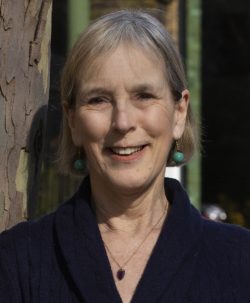
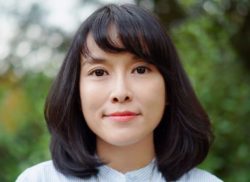 1930s to Britain in the 2020s, with two of our Centre’s oldest friends and supporters: the prolific translator (and Leeds graduate!) Nicky Harman, and the award-winning bilingual author and creative writing tutor, Yan Ge颜歌. The afternoon began with a presentation by Nicky about the fascinating life and short stories of one one of China’s earliest feminist writers, Ling Shuhua 凌叔华 (1900-1990). Nicky talked about how Ling’s works still reach out to us today, and how this early she corresponded with and became friends with members of the Bloomsbury Group, including Virginia Woolf, in the 1930s and 40s. We focussed on one of Ling’s most autobiographical works, the short story “Boredom” (read it in Nicky’s translation on our bookclub!). Nicky’s presentation is now available on our Youtube channel. This vibrant and engaging talk was followed by a hands-on creative life-writing workshop led by Yan Ge where participants, several of whom were completely new to creative writing, could write, discuss and have valuable feedback on their own work.
At the end of the workshop a creative writing competition was launched, judged by Nicky and Yan Ge.
We are delighted to announce that the winning entry was:-
“The First Sun Day” by Audrey Eileen Kelly
and the runner-up was
“Bus” by Gao Lin.
Congratulations to both. Audrey has received a voucher to an Arvon creative writing workshop as her prize.
Writing Chinese asked our two speakers to answer some questions about the event, the competition, and the winning entries. Many thanks to Nicky and Yan Ge for always being so incredibly generous with their time and support for our Centre.
(WC) What makes Ling Shuhua stand out among other writers of her era?
(NH) Ling Shuhua (1900-1990) came from a traditional high-ranking Peking family – her mother was one of a number of concubines in a large household – but she had a modern education. She had good connections with the literati, like Lu Xun, the poet Xu Zhimo, the painter Qi Baishi, among others and, as was the case with others of her contemporaries, she read and admired Western writers, for instance, Virginia Woolf, Katherine Mansfield and Anton Chekhov. International visitors came throughout the 20s and 30s. Bertrand Russell and Dora Black (Dora Black lectured to Ling and her sister at university about love, freedom and sexuality for modern women, and women’s rights in the USSR). Ling and others hosted the Bengali scholar Rabrindranath Tagore, and Ling was known for her salons. And Wallis Simpson, the future Duchess of Windsor, lived down the street for 6 months in 1924-5, at the home of the American couple, Herman and Katherine Rogers! Peking in the 1920s and until the mid-1930s was a remarkably cosmopolitan and intellectually vibrant city.
Ling was one of a number of excellent women and men writers. What makes her stand out is not just the high quality of her stories but their themes. It was worth remembering what was happening outside the protective walls of these hutong mansions – the complete collapse of civil society. Han Suyin, who grew up in Peking in the early 1920s, talks of abandoned dead babies, and ‘frosty mornings [when] beggars are found dead in the streets’. Ling’s stories are an extraordinary contrast with this world, focussing as they do on women navigating the conflict between social expectations and personal desire.
(WC) Why was the Chinese author Ling Shuhua a good choice for a life-writing event on International Women’s Day?
(NH) Ling Shuhua’s first story was published when she was 24 and she soon positioned herself as a writer about women’s inner worlds. Her stories can be grouped roughly into those featuring children (some of the most powerful); young women striving for independence and coming to terms with their sexuality; and educated women’s crushed ambitions, resistance, resilience, defeat or small victories. Whether she was portraying the struggles of the illiterate poor or the educated elite, Ling’s stories explore universal themes of love and pain. And it is this universality that gives her stories their continuing appeal. The social constraints that her women protagonists faced are obviously from another era – but their feelings are entirely human. As Donald Holoch, the American critic and translator, wrote: ‘Her stories ‘…demonstrate her skill in characterization through dialogue and her alertness to the significance of seemingly routine detail, particularly in the lives of women. In her dispassionate narration, everyday trivia emerges as a veneer over terrible institutionalized anguish. Such a devastating description and indictment of patriarchal society won her the respect of writers all across the political spectrum.’
(WC) Is it important that characters in what we read are relatable?
(YG) I’ve always believed that relatability isn’t necessarily an issue within the story itself, but rather in how we approach it as readers. Often, when we read from the comfort of our existing expectations, anything that challenges those expectations can feel unrelatable. But at its core, literature is meant to expand our experiences and challenge our assumptions. It is a radical exercise in empathy. In this light, encountering a story that initially seems unrelatable and then discovering unexpected resonances within it is one of the most invigorating aspects of reading.
(WC) Are creative writing workshops common in China, and are they similar to ones in the UK?
(YG) Creative writing workshops have become increasingly popular in China in recent years. Many people are joining these workshops not necessarily to become professional writers, but to broaden their perspective on life and deepen the emotional richness of their experiences.
(WC) What did you most like about our winning entries in this competition? Are there particular extracts you can share with us?
(YG and NH) We chose “The First Sun Day” as the overall winner as we were deeply impressed by this electrifying story brought to life by a bold, distinctive narrative voice – a brisk yet deeply insightful exploration of the complexities of love and family life. Below is an extract from Audrey’s winning entry which demonstrates this (but look out for the full version when it is published, as we are sure it will be soon!):-
There it is – she rips it out from underneath the rest, not caring how many Northface puffies and stuffed dinosaurs and disgusting used tissues are upended in the process. Patting the pockets to make sure all the tobacco hadn’t rolled out, she realizes this means that it’s time to leave. Fuck. Shrugging on her jacket, she breathes in – and again, a little more - lips puckered so she can feel the air traveling in. And out. And out some more, and out some more. She plasters a smile on her face, decides she needs one more breath before it can be believable, and plasters again.
Ready. Set. Go.
She steps into the hall and it all becomes loud and moving and she’s smiling and nodding, squatting down to say hi to Evan and jokingly bestowing the clown nose onto him, telling him he was her favorite nephew but now he’s her favorite clown, god she loves that weirdo, hugging Beebs, who holds the hug for a little too long, oozing the confused concern of an older sister who can spot a plastered smile a mile away, but she’s sure Beebs is too busy with the sensibility and the kids with cake highs and the nosy moms to say anything, opening the front door and walking briskly down the lane before ducking into the alley and pulling out her tobacco with trembling fingers.
(YG and NH): Our runner-up, “Bus” by Gao Lin was highly commended. We felt it was brilliantly original. This surreal story escalates with intensity, examining themes of belonging and displacement with both playfulness and poignancy. You can see some of this in the following opening extract:-
The bus was always late. “You should get yourself a drive license, love,” my husband said. He might have been right. This was his town. I was the outsider.
“I’m patient,” I told him. I said it to put him off, and I said it to convince myself.
Even after twenty-two minutes, I was not bored. Instead, I found myself wondering how much the Lollipop Lady was paid. Half an hour in the morning, another in the afternoon. Best job in the world.
She pushed herself up off the low wall, stepped into the middle of the steepest, busiest road in the village. Every car slowed, stopped. That was the law. People just followed it.
Order. Something I never knew much of back home. I still remembered when my grandpa died at home — ambulance stuck in the traffic an hour. Maybe all we needed was a lollipop lady, holding a sign, making it all stop.
That was why I agreed to travel thousands of miles to my husband’s hometown, to find the order and peace I’d longed for.
“But not now,” I thought. Just a couple of meters from where I stood, Yorkshire Water had been digging holes since early morning. Pavement blocked. Workers gone. Just a digger, sitting there, waiting.
(WC) If anyone reading this has never tried life writing before and is thinking about giving it a go, what advice would you give them?
(YG) Carve out a sacred time for writing – whether it’s an hour a day, twenty minutes, or an hour every other day – whatever fits your life. The key is to set a writing schedule and truly honour it. Showing up and putting in the time is the best place to start.
Feedback from participants
“I am fascinated by the dynamic cultural exchange between the East and West during the early 20th century. The author’s personal experiences and her struggles as a woman inspire me.”
“Yan's workshop also helped me think about the characters I'm translating - even if I can't get a full-fledged grasp of how the original author might have thought of them (my imagination of what they eat for breakfast might be different than what the original author thought, for instance), it still is valuable so as to make well-rounded, compelling characters in the English version of a text - at least that's what I think!”
“More Chinese academia should learn how to make connections with translators, writers and relevant contributors as you have been doing.”
“I loved all of it. Hearing about Ling Shuhua. I also loved the creative session with Yan Ge and hearing other participants share their creative works”
This event was made possible due to an award by the Royal Society of Literature (RSL) Literature Matters These awards are intended to reward and enable literary excellence and innovation.
