
Chinatown Cha Cha (Film Review)
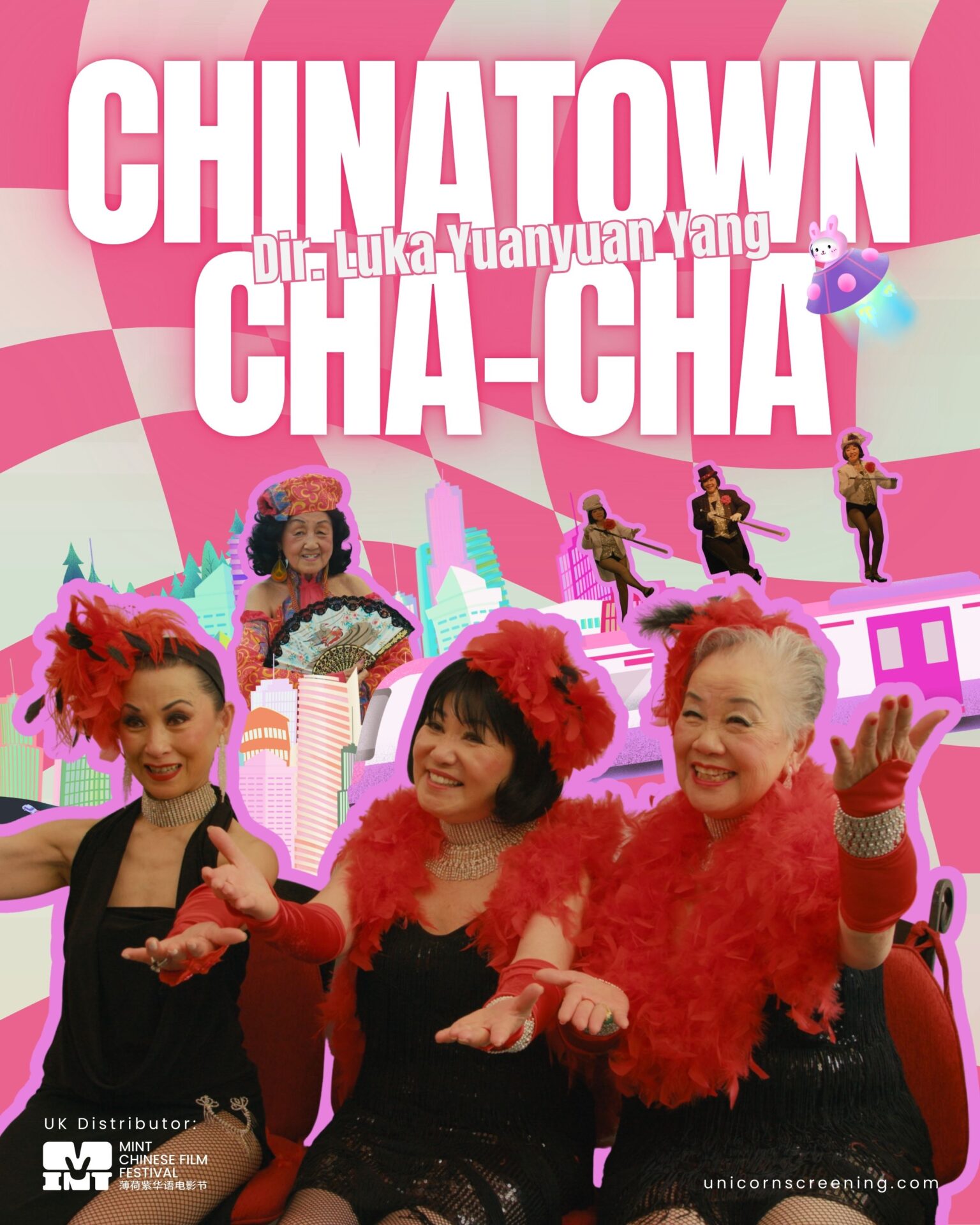
Chinatown Cha Cha is a documentary about the legendary Chinese American burlesque dancer Coby Yee (1926–2020), who continued dancing after retirement with the senior performers’ group Grant Avenue Follies, fostering social engagement and community reconnection for older adults in the United States. The documentary opens with a rigorously researched historical overview of Chinatown nightclub culture in 20th-century America, focusing in particular on San Francisco’s Grant Avenue and the iconic Forbidden City Nightclub. Through this case, the film reveals the specificities of Chinese/Oriental performance industries and how they emerged in response to the socio-economic conditions and racial hierarchies of the time.
The film adopts a subtle alienation strategy, presenting Coby Yee’s life and performance practice in a way that invites deep reflection. As the French dramatist Benoît-Constant Coquelin famously proposed, performers possess “two selves”: the conscious artist who shapes the performance, and the embodied figure who delivers it before audiences. Coby Yee demonstrates a remarkable awareness of—and fluidity between—these dual identities.
On one level, Coby’s passion for dance as a burlesque artist is undeniable. When she entered the Chinatown burlesque scene as a teenager dance, for her, was a life’s calling. Yet burlesque work also involved compromise—dancing became a means of earning a living under circumstances shaped by limited opportunities and pervasive racial discrimination against Chinese Americans. The documentary recounts how burlesque performers, particularly women, were marketed through Orientalist fantasies and the erotic spectacle of revealing costumes—deployed to attract largely white male patrons and sustain the nightclub economy. As Coby poignantly notes, these “showgirls are part of Chinese American history.” Despite their cultural significance, such performers have long been marginalized in performance histories, overshadowed by those working in more prestigious theatres and opera houses.
On another level, Coby Yee embraced the role of the “instrument of performance,” captivating audiences during the peak era of Chinatown burlesque and contributing to the development of Chinatown’s nightclub culture. Yet what feels most impactful is the work she undertook after retirement. As the documentary highlights, Coby was invited by Cynthia Yee to join Grant Avenue Follies, performing and teaching dance to seniors across the United States. This work foregrounds participation, dignity, and collective joy—echoing the words of Coby’s husband, Stephen King: “When people get old, they do not want to be forgotten.” The Follies also tour internationally, including a pre-pandemic artistic exchange with Chinatown communities in Cuba, recognizing that theatre is not merely performance—it is a social space for relaxation, reunion, and belonging.
In conclusion, I deeply appreciate director Luka Yuanyuan Yang for crafting such a moving documentary that uses film as a medium to archive and honour a theatrical history. Through her lens, we witness not only the remarkable artistry of Coby Yee but also the stories of her colleagues and family—stories that belong to the wider narrative of Chinese American cultural memory. The film affirms that a life in dance does not end with age: these artists continue to find joy, connection, and purpose through performance. Coby danced until the final days of her life—an enduring testament that a true dancer is not defined merely by technical perfection, but by an unwavering love of the craft and a relentless devotion to her own “swan dance.”
Chinatown Cha Cha was shown at the Pictureville Cinema, National Science and Media Museum, Bradford, on 17 September 2025, as part of the Mint Chinese film festival.
Reviewed by Xunnan Li, 30/10/25